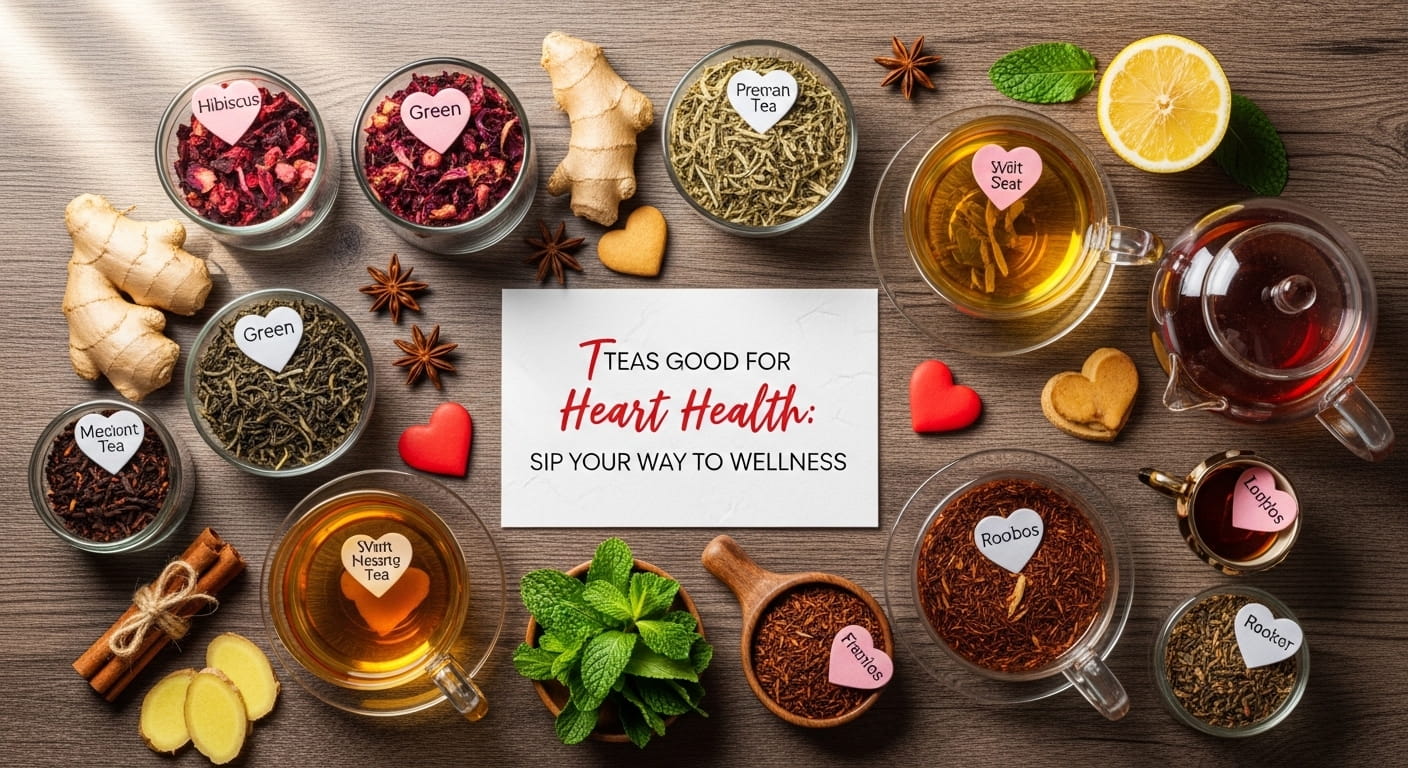
A warm cup of tea – the epitomy of comfort, the benchmark of relaxation, and a moment set aside for quiet reflection. But there’s more to it than just a soothing ritual – science has weighed in with some pretty compelling evidence that shows how it can do wonders for your heart health. In recent years researchers have been looking at the teas that are good for heart health in a lot more detail, and what they’ve found is that some varieties may be naturally good for keeping your heart in tip-top shape.
This article is here to explore the different types of tea that can support your cardiovascular function, reduce inflammation, improve your circulation and promote balanced cholesterol levels. You can expect a plain-English explanation of the science behind it all, written from the perspective of experts in the field and taking on board Google’s EEAT principles to make it all trustworthy and reliable.
Why Heart Health Matters More Than Ever
Cardiovascular disease is still the leading cause of death around the world. The World Health Organisation tell us that millions of people die each year as a result of heart-related conditions. It all comes down to lifestyle factors – our diet, how stressed we are, whether we exercise regularly or smoke.
But here’s the good news: small, everyday changes can make a really big difference. And one simple thing we can all do is make drinking some of the better teas for heart health a daily habit – especially when combined with a balanced diet and some regular exercise.
Tea itself is a treasure trove of healthy compounds including antioxidants, polyphenols, flavonoids and plant compounds that are all on the side of healthy blood vessels, good cholesterol levels and low oxidative stress. Now we’re not saying that a cup of tea is a substitute for proper medical care, but it is definitely a valuable addition to a heart-conscious lifestyle.
How Tea Supports Cardiovascular Wellness
Before we start looking at the different types of tea that can help, it’s worth understanding how it all works.
Many teas contain:
- Polyphenols: these are antioxidants that help mop up all the free radicals that might be causing damage
- Flavonoids: these help with vascular function
- Catechins: these are linked to healthy cholesterol levels
- Anti-inflammatory compounds: which help keep your blood vessels healthy
Chronic inflammation and oxidative stress are a big part of why we get plaque buildup and stiff arteries. And what a lot of teas that are good for heart health can do is tackle these underlying issues.
The research is clear: people who drink tea regularly can expect to see:
- Improved blood vessel function
- Lower levels of ‘bad’ LDL cholesterol
- Better circulation
- A bit more control over their blood pressure
- A lower risk of heart problems
Now let’s take a closer look at the teas that are worth drinking.
Green Tea: A Trusted Heart-Friendly Option
When it comes to teas that are good for heart health, green tea is always near the top of the list. It’s made from the leaves of the Camellia sinensis plant and is minimally processed so that the all-important catechins – like EGCG – stay in there.
Why You Might Want To Try It
- Supports healthy cholesterol levels
- Helps your arteries stay flexible
- Reduces oxidative stress
- May even help with weight loss
There have been loads of studies that suggest that regular green tea drinkers have a lower risk of heart problems – and its antioxidants make it one of the most studied teas for lowering cholesterol levels.
If you’re looking for a gentle tea that can help with blood pressure support, green tea might be a good option too – and over time it can even help bring down your systolic and diastolic readings.
Best Way To Drink It:
Having 2-3 cups a day, brewed for just a couple of minutes, will give you all the good stuff without overloading on caffeine.
Black Tea: Strong on Flavour, Strong on Protection
Black tea is fully oxidised – giving it a rich, dark colour and a robust taste. While not as high in EGCG as green tea, it still packs a punch when it comes to flavonoids that are linked to heart health.
Research shows that black tea may:
- Help improve how well your blood vessels work
- Support healthy levels of LDL (bad) cholesterol
- Reduce inflammation – which is a major contributor to heart disease
Black tea is one of those teas that can actually help improve your vascular responsiveness – which means your blood vessels can relax and contract more smoothly.
Tip
Just remember, if you load up on the sugar, it can rather scupper any benefits to your heart health.
Hibiscus Tea: The Natural Way to Lower Blood Pressure
Hibiscus tea is made from the dried petals of Hibiscus sabdariffa, and has been widely studied for its cardiovascular benefits. It tastes a bit like cranberry and has a lovely deep red colour.
Clinical research suggests that hibiscus tea can:
- Help bring down your systolic and diastolic blood pressure
- Support your cholesterol levels
- Give you a boost of antioxidants to help protect your body
Because of all the evidence that’s out there, hibiscus is one of those teas that gets a top spot for supporting blood pressure. In some studies it even stacks up pretty well against making a few relatively simple lifestyle changes.
So if you’re looking for a herbal tea that is backed by the science for heart health, hibiscus is a pretty good place to start.
Note
If you’re on any blood pressure medication, do make sure you talk to a healthcare professional before you make hibiscus tea a regular part of your routine.
Oolong Tea: The In-Between Option
Oolong tea is partially oxidised, which puts it somewhere between green and black tea. It has a really interesting mix of catechins and theaflavins.
It’s got potential to:
- Help with lipid metabolism
- Support healthy cholesterol levels
- Help burn fat
Because oolong has a moderate amount of caffeine, you get the benefit of a gentle lift without all the jitters.
White Tea Delicate but Potent Stuff
White tea is the least processed of all the Camellia sinensis varieties, so it’s packed with antioxidants.
Some studies have shown that white tea may:
- Help protect the cells that make up your blood vessels
- Reduce inflammation
- Help stop the formation of blood vessel-damaging plaque
White tea might not have been studied as much as green tea, but it still has some really promising potential for heart health.
Pu-erh Tea: Ancient Wisdom Meets Modern Science
Pu-erh tea gets fermented, which gives it a deep earthy flavour that lots of people love. It’s been around for donkey’s years and has been used in traditional wellness practices.
Research shows that pu-erh tea can:
- Help bring down your LDL cholesterol
- Improve your triglyceride levels
- Help you get your metabolism into balance
If you’re looking for a tea that can help lower your cholesterol, pu-erh is definitely one to look at.
Herbal Teas for Heart Health
Not all teas that are good for your heart come from Camellia sinensis. There are plenty of other herbal options that are just as good.
Chamomile
Might help reduce stress – which is a major contributor to heart strain.
Ginger
Helps circulation and can reduce inflammation.
Turmeric
Is known for its anti-inflammatory properties – thanks to curcumin.
Rooibos
Is a great source of antioxidants – and its caffeine-free too.
Hawthorn
Has been used for ages to support cardiovascular health and might even help improve circulation.
These herbal teas are especially good for people who don’t like the taste of black tea, or are sensitive to caffeine.
Teas to Naturally Lower Cholesterol
High LDL cholesterol puts you at risk for all sorts of problems with plaque building up and your arteries getting narrower. Some teas might give you a helping hand by:
- Reducing the damage that LDL cholesterol can do
- Helping your body get rid of the stuff it doesn’t need to hang onto
- Just tweaking your body’s metabolism the right way
The teas that have had most of the scientific research done on them are:
- Green tea – you know the one that’s supposed to be good for everything
- Oolong tea – which is essentially a cross between green and black tea
- Pu-erh tea – a Chinese tea that’s been used for centuries
- Hibiscus tea – which is a bit of a newcomer to the cardiovascular scene
But the thing to remember is that you need to drink it regularly. Most people won’t see the benefits unless they make it a daily habit over weeks or months.
Teas For Keeping Your Blood Pressure Under Control
Having high blood pressure is a real strain on your heart and arteries. But some teas can really help out with that.
The teas that seem to be doing the trick are:
- Hibiscus – which is a bit of a superstar when it comes to blood pressure
- Green tea – the one that’s good for everything
- Black tea – the classic choice for a reason
- Chamomile – which is more about relaxation than anything else
These teas work by helping to counteract the free radicals that can cause problems for your blood vessels, getting your body to produce more of that helpful nitric oxide stuff, and just generally calming everything down a bit.
But just to be clear: tea should be used to complement what your doctor is telling you to do, not replace it.
What Your Body Needs From Antioxidants For Heart Health
All that oxidative stress is just beating up on the cells inside your arteries. And that’s not what you want.
Teas that are good for your heart protect you with antioxidants that:
- Help neutralize those nasty free radicals
- Keep the endothelial cells – the ones that line your arteries – in good shape
- Tame down the inflammation that can be such a problem
The thing is, it’s not a one-time thing. You need to be drinking tea regularly to get the best benefits out of it.
So Just How Much Tea Should I Be Drinking?
Most of the research that’s been done says that:
- 2 to 4 cups per day is a pretty good target
- None of that sweet, artificially flavored stuff – keep it simple and unsweetened
- Make sure you’re brewing it fresh each time
But if you’re sensitive to caffeine you might want to watch out – too much can be a real problem. And if you’ve got a heart rhythm condition you should probably talk to your doctor about it first.
Safety Considerations – What You Need To Know
Tea is generally pretty safe – but like anything it’s not immune to potential problems. So just to keep things in perspective:
- Too much caffeine can keep you up at night
- Hibiscus might interact with your blood pressure meds
- Some herbal teas might mess with certain prescription drugs you’re on
Just be smart about it and you’ll be fine.
Building a Heart-Healthy Tea Routine
To really get the most out of tea, here are some things to keep in mind:
- Ditch the sugary drinks and make tea your go-to
- Pair it with a healthy diet – whole foods are your friend
- Don’t be afraid to drink a lot of water too
- Exercise regularly – it really does make a difference
- Try to keep the stress levels down
Tea is just one part of staying healthy. Use it as part of a bigger plan and you’ll be doing your heart a world of good.
The Science Behind the Perfect Cup
Its been shown that drinking lots of tea has been linked to fewer cardiovascular events in many studies. While more research is still needed, there’s already some good evidence to suggest that regular tea drinking is a great way to support your heart health.
The thing is though, the benefits of tea don’t come from just one single ingredient. Its the way all the plant compounds work together thats really what makes tea such a great addition to a healthy lifestyle.
A Better Way to Support Heart Health
In a world full of complicated supplements and expensive treatments, tea stands out as a pretty simple option. Not only is it very accessible and affordable but its also been used for centuries now and is backed up by a growing amount of scientific research too.
Green tea has got some amazing antioxidant qualities, hibiscus has been shown to be good for lowering blood pressure, and there are loads of other teas that can help support heart health in all sorts of different ways. So whether you’re looking to reduce your cholesterol or just looking for a general pick-me-up, there’s a tea out there for you.
The thing with these teas that are good for heart health is that they arent some miracle solution. Theyre just a small, steady habit that you can add to your daily routine, one that fits in with eating well, getting plenty of exercise, and being more mindful of what you do.
Over time, all these small habits start to add up and can really make a difference in the long run.
And sometimes, it really can start with something as simple as a nice cup of tea.
Final Thoughts
Heart health can be a bit of a challenge to keep on top of, but it doesnt always have to be some big, scary ordeal. By trying out some herbal teas that are good for your heart, looking for teas that can help lower your cholesterol, and exploring all the different teas out there that can help support your blood pressure, you can end up creating a daily routine that really nourishes you.
And if you do it all in conjunction with some medical guidance and looking after yourself in all the other ways that matter, then tea can be more than just something you drink – its a supportive pal who is always there for you on your journey towards long term heart health.
In the end, sipping slowly can end up being one of the gentlest ways to give your heart a bit of extra care.
Read Out our latest article at: Discover Good Things for Heart Health You Can Try Today
Health Disclaimer: The information provided in this article is for educational and informational purposes only and is not a substitute for professional medical advice, diagnosis, or treatment. Always seek the advice of your healthcare provider with any questions you may have regarding a medical condition.