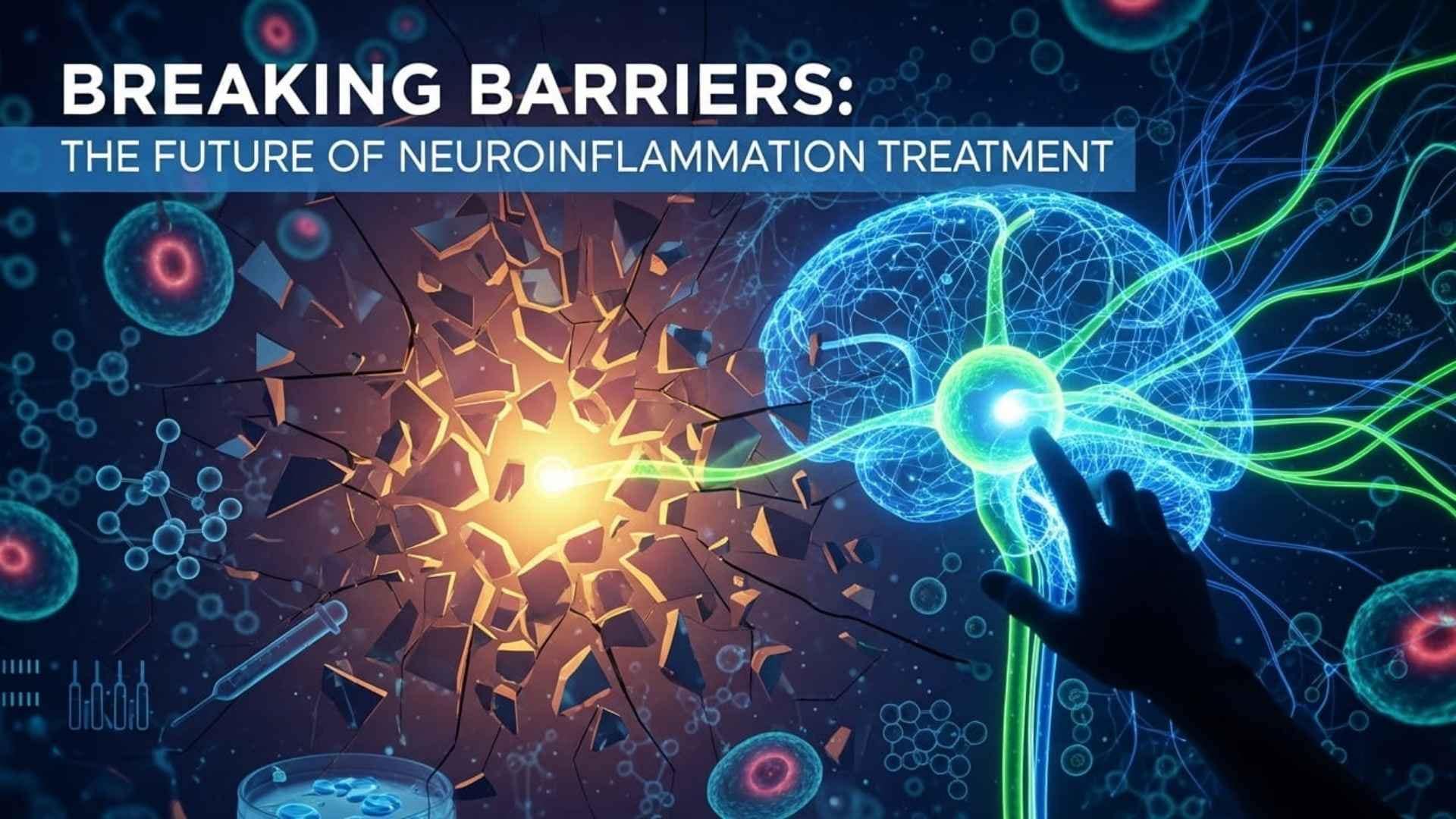
Neuroinflammation has been slowly but surely inching its way to the front and center of neuroscientific study. Researchers once dismissed it as merely a byproduct of injury or infection—a secondary consequence that attracted attention but little respect. Today, they widely recognize it as the main driving force behind many of our most debilitating neurological and psychiatric disorders. As we learn more about how neuroinflammation works, treatments for neuroinflammation are starting to emerge as one of the most promising new frontiers in modern medicine – a potential game-changer for conditions like Alzheimer’s disease, Parkinson’s disease, multiple sclerosis, depression, and even long COVID.
This article is looking into where things stand with our current understanding of neuroinflammation, why it’s been so difficult to figure out how to treat – or even just to get a handle on – and how some of the new treatments that are on the horizon might finally be able to break through the barriers that have been holding us back for so long.The writer explains from an outside perspective, bridging the gap between complex research and real-world implications for people living with these conditions. The writer follows Google EEAT principles, highlights science that withstands scrutiny, amplifies expert insights, and shows how all of this impacts people directly.
Getting Your Head Around Neuroinflammation its More Than Just Swollen Brain
Neuroinflammation – or to put it simply, the brain’s immune response – is a complex situation involving the resident immune cells of the CNS (central nervous system) microglia and astrocytes. We must keep neuroinflammation in check, unlike the processes that occur in the rest of our bodies. The brain doesn’t have a fully-fledged immune system so it relies on a delicate balance to keep neurons safe without going overboard & causing too much damage.
Normally this inflammatory response is working for us. It helps us out by clearing out debris, fighting off infections, and getting us back on our feet after an injury. This inflammation causes problems when it refuses to stop or becomes disorganized. When immune pathways lock into the ‘on’ position, they damage neurons, disrupt communication between them, and accelerate the brain’s breakdown.
It’s this shift from being helpful to being a menace that makes finding a way to treat neuroinflammation so tough. You see, its not about getting rid of the inflammation completely – but finding a way to get that balance right.
Why Neuroinflammation’s the Bigger Picture Behind Many Diseases
The reason neuroinflammation has got everyone talking is because of its sneaky knack of turning up all over the place – in heaps of different disorders. Fundamentally, researchers are now coming to see it as a shared thread that underpins all those conditions, rather than a separate thing each one has going on.
In Alzheimer’s, for instance, there’s solid evidence that chronic inflammation actually makes the amyloid-beta and tau pathology even worse. Same story in Parkinson’s, where inflammatory processes are basically accelerating the loss of those vital dopamine-producing neurons. Multiple sclerosis presents as an autoimmune condition characterized by intense neuroinflammatory activity. Researchers have also linked mood disorders like depression to ongoing low-grade brain inflammation.
That this one factor is turning up in so many different places has put neuroinflammation therapy centre stage. Instead of ploughing away at individual diseases one by one, scientists are now starting to explore strategies that attack those shared inflammatory pathways. Which could potentially offer benefits across loads of different conditions.
The Historical Hurdles of Neuroinflammation Treatment
Despite all the years of research that have gone into it, the progress in tackling neuroinflammation has been pretty glacial. The main reason for that lies in the fact that a whole stack of challenges has pockmarked it.
1. The Blood Brain Barrier – A Decidedly Uncooperative Protector
The blood-brain barrier (BBB) – the supposedly protective shield that stops bad stuff getting into the brain – has been proving a real pain in the neck when it comes to neuroinflammation treatment. For starters, it keeps out all those nasty things we dont want in the brain – but its also just as effective at blocking the useful drugs that could actually help, as anything else.We face the challenge of developing neuroinflammation medications that can penetrate this barrier and deliver real benefits.
2. Complexity, Complexity, Everywhere
Inflammation in the brain isnt just some simple on/off process – its a right old mess of multiple signaling molecules, loads of different cell types and feedback loops – all interacting in complicated ways. And that means that if we just go and try to suppress one particular pathway, were not just messing with one thing – were potentially making the whole thing worse.
3. Trying to Fit a Square Peg Into A Round Hole
Early on, most attempts at dealing with neuroinflammation just threw the kitchen sink at it – a broad brush approach that involved anti-inflammatory drugs like NSAIDs. But the thing is, these treatments just werent designed to take into account all the individual differences in the disease, the genetics and the immune response. And that means they just werent very effective – the results were all over the place.
So all of this has taught researchers a pretty valuable lesson – if they really want to tackle neuroinflammation, then they’ve got to be looking at precision, timing and personalization.
A Shift in Perspective – From Suppression to Modulation
One of the big changes in recent times has been a shift in thinking – rather than trying to shut of inflammation altogether , modern neuroinflammation treatments have turned their focus on modulation – that’s guiding the immune system to do repair work instead of causing damage.
The immune cells in the brain, called microglia, can actually exist in different modes. Some of them crank up the inflammation, while others help fix things and keep the synapses running smoothly. The new treatments that are emerging are trying to coax the helpful ones to come out and play while keeping the nasty ones from getting in the way.
This smarter way of looking at brain immunology is a major milestone for neuroinflammation treatments.
Current Neuroinflammation Drugs What Works, and What Doesn’t
There are a number of different types of drugs that are in use or in the works for managing neuroinflammation :
Anti-Inflammatory Agents
Old-fashioned anti-inflammatory meds haven’t done a great job in tackling chronic neurodegenerative conditions. Sure, they may reduce some inflammation in the periphery, but when it comes to long-term brain inflammation – they just don’t have the same kind of impact.
Immunomodulatory Drugs
When it comes to making a dent in diseases like multiple sclerosis, immunomodulatory treatments have actually shown some real promise. Rather than just turning off the immune system altogether, these drugs tweak it just enough to bring down relapse rates and slow down disease progression.
Biologics and Monoclonal Antibodies
Targeted biologics that zero in on specific inflammatory molecules are getting a lot of interest. These neuro-inflammation treatments offer a lot more precision than the older anti-inflammatories, but there are still problems to iron out like cost, how you deliver them, and potential side effects to boot.
Despite none of these options being a magic bullet, they are providing some important clues that are helping shape the next generation of treatments.
The Role of Precision Medicine in Neuroinflammation Therapy
Precision medicine is doing some amazing things in a number of healthcare areas, and neuroinflammation is one of them. With new developments in things like biomarkers, imaging techniques, and genetic profiling, doctors can now actually identify the unique inflammatory patterns that show up in each individual patient.
For instance, certain markers in the blood or cerebrospinal fluid act like flags that signal neuroinflammation and reveal which pathways are involved. These markers provide doctors with the information they need to make informed treatment decisions, enabling them to prescribe the right medications at the right time.
Treating neuroinflammation not just works better, it reduces the risk of those nasty unwanted side effects – the kind of thing you really dont want to see in your brain health.
Emerging Technologies That Are Revolutionising Neuroinflammation Treatment
There are some really exciting technological developments happening right now that are giving neuroinflammation treatment a huge boost:
Advanced Brain Imaging
With brand new imaging techniques you can get an eyeball view of what’s going on in a living brain – its some pretty cool stuff. This lets researchers follow the progression of the disease, and how well different treatments are working – all in real time.
Nanotechnology
The idea of delivering medicine using tiny nanoparticles that can just sail right across the blood-brain barrier is a real game-changer. These delivery systems can get the treatment straight to where its needed, with a lot less of the nasty side effects that can come with it.
Artificial Intelligence
Analysing mountains of data with AI is uncovering patterns that might be right under our noses. From figuring out who’s at risk of disease to working out the best treatment plans, AI is really starting to make its mark in neuroinflammation research.
Together all these technologies are smashing down walls that used to seem almost impossible to climb.
Lifestyle and Non-Pharmacological Strategies
Though new drugs are being developed, the medical community is coming to realise just how much a person’s lifestyle choices can play in managing neuroinflammation. Stress, lack of sleep, relying too much on a sedentary life and eating rubbish food can all make our brains become much more inflamed.
Research is showing that a regular jog or bike ride, eating a diet full of omega-3 fatty acids to cut down inflammation, getting a good nights sleep, and finding ways to reduce stress can help keep your brain defences firing on all cylinders. These lifestyle changes aren’t a replacement for proper medical treatment, but they can certainly work with pharmacological neuroinflammation therapy to make you brain more resilient.
This holistic perspective reinforces the idea that effective treatment for neuroinflammation goes a lot further than just prescriptions.
Neuroinflammation and Mental Health getting a clearer picture of how they’re connected
one of the most fascinating things to come out of this area of research is the link between neuroinflammation and mental health disorders. and its interesting to note that in some subgroups of people with depression, anxiety and schizophrenia, the levels of inflammatory markers are seen to be running higher.
this is starting to open up some new possibilities for neuroinflammation treatment in psychiatry – where anti-inflammatory approaches may help patients who havent responded to other therapies . which is pretty exciting when you consider how fast this field is emerging – its starting to show just how far-reaching the impact of neuroinflammation research is going to be
The tough questions ethics and safety in neuroinflammation treatment
as we start to get more powerful treatments in place , the ethical considerations just get more complicated . messing with the immune system in the brain carries risks – such as getting infections or some unintended cognitive side effects , and there is potential for long term disruption to the immune system
To bring neuroinflammation treatments to market that people can trust, rigorous clinical trials are essential. along with transparent reporting and ongoing monitoring. The key ingredient to that trust is a delicate balance between innovation & patient safety – and making sure patients are fully informed about what they’re getting into – that’s what the core “Trustworthiness” principle is all about.
The Road Ahead : What the Future Has in Store for Us
Things arent going to get any easier, on the other hand it’s looking like the future of neuroinflammation treatment has plenty of potential. We can see the beginnings of some exciting therapies on the horizon :-
- ones that target only the specific inflammatory pathways that are relevant
- ones that are timed to hit exactly when the disease needs it most
- ones that use individualised biomarkers and genetics to give each person the right treatment
- and even ones that put the importance of lifestyle and brain health right front and centre
Rather than just one single ‘miracle cure’ coming from some lab, progress is more likely to be made by coming at brain inflammation from lots of different angles at once.
Final Thoughts
Neuroinflammation is no longer a process shrouded in mystery its now a major player in brain wellbeing and disease. The shift towards a more precise approach to treating neuroinflammation is part of a wider seismic change in the medical world, one that’s also all about tailoring treatment to the individual, and focusing on stopping problems before they start rather than just treating symptoms as they arise.
The medical community is moving away from suppressing inflammation with a heavy-handed approach and is combining cutting-edge technology with holistic patient care. This shift is breaking down long-standing barriers that once held progress back. Although researchers still have much to uncover, the direction is clear neuroinflammation therapies are about to fundamentally transform how we treat neurological and psychiatric disorders.
As more & more research gets done, one thing is clear – getting a handle on neuroinflammation is not about turning off the brain’s immune system, but rather about getting that system working in balance again. That balance could be the key to healthier brains and better lives in the years to come.
Read Out our latest article at: Heart Health and Eggs How Many Eggs Can You Safely Eat Daily
Health Disclaimer: The information provided in this article is for educational and informational purposes only and is not a substitute for professional medical advice, diagnosis, or treatment. Always seek the advice of your healthcare provider with any questions you may have regarding a medical condition.