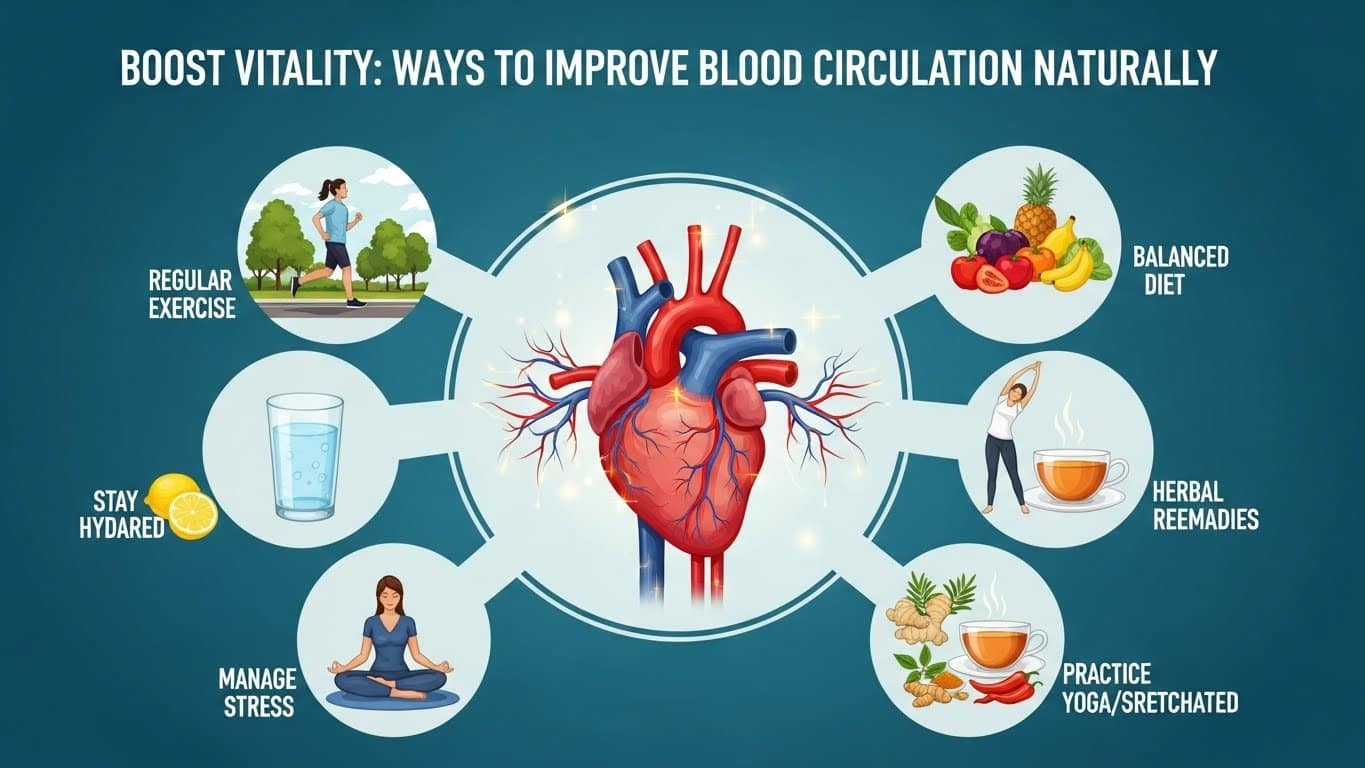
Blood circulation is incredibly important to your overall health – but also often flies under the radar – quietly doing it’s thing behind the scenes. It brings oxygen & nutrients to every single one of your cells, gets rid of waste products that your body doesn’t need, helps your major organs keep on ticking, and even plays a role in how much energy you have each day, how focused your brain is and how good you feel when you’re moving around. When circulation starts to slow down or get bogged down, the body usually gives you little warnings – cold hands & feet, stiff muscles, numbness, swelling, feeling utterly exhausted, or just a general sense of pain thats hard to pin down.
The good news is that there are loads of ways to give your blood circulation a boost that you can do from the comfort of your own home without having to rely on a ton of meds or going for super invasive treatments. Making some simple lifestyle changes, doing some gentle exercises, eating some really nourishing foods, & trying out some tried and true natural remedies can all help your body get the healthy blood flow it needs to start feeling more like itself again.
This article looks at the science behind circulation, the most common reasons why people have poor blood flow, & some evidence based strategies to give your circulation a natural kickstart at home – all while helping you to ease those everyday aches & pains in a way that’s safe & sustainable.
Understanding Blood Circulation – and Why It Actually Matters
Blood circulation is the never-ending cycle of blood flowing through the heart, arteries, veins and tiny little capillaries – all working together to keep the body’s tissues from turning into mush . The fact is , this constant movement is what keeps our muscles and organs going strong. We need good circulation to ensure that oxygen gets to our muscles and organs as quickly and easily as possible – as does all the other good stuff they need to function properly. Some of the key benefits of healthy circulation include:
- Getting all that important oxygen right where it’s needed – which isn’t always far from the heart you know
- Making sure those vital nutrients get delivered to all the areas of the body which are crying out for them
- Removing all the crap that builds up when we’re wounded or sick so that our body can start healing
- Keeping our body temperature at a nice stable level – which is not as easy as it sounds , by the way
- Giving our nerves and joints all the nourishment they require so they can keep on trucking
When it all goes wrong and circulation starts to suffer – tissues get a little starved of oxygen and before you know it you’ve got stiffness, pain and that heavy, weighed down feeling in your legs, feet, hands and lower back.
Its not just a temporary thing , poor circulation can take its toll on your heart, how well you can move around and even how sharp your mind is in the long run. That’s why figuring out ways to boost blood flow naturally is a super important part of taking care of yourself over the long haul.
Common Signs That You Might Have Poor Circulation
A lot of people with poor circulation don’t even realize what’s going on with their bodies for years , because the symptoms can creep up on them so slowly . Here are some common signs to keep an eye out for:
- Even when you’re sitting in a warm room your hands and feet are cold – it’s a pretty common symptom
- You get that annoying tingling, numbness or ‘pins and needles’ feeling in your fingers or toes
- Muscle cramps or tightness – yeah that’s a sign of poor circulation
- Your ankles and legs get all puffy from fluid buildup
- You feel tired all the time and just can’t muster up the energy to do much of anything
- Even minor scrapes take a long time to heal because blood flow to that area is slow
- You’ve got aches and pains in your legs after you’ve been sitting or standing for too long – doesn’t matter how long you’ve been doing it for
It’s worth noting that these symptoms don’t necessarily mean you’ve got a serious problem on your hands , but they do suggest that your body could benefit from a bit of TLC and some natural remedies to help with poor circulation
What’s Behind the Decline in Circulation?
Several things can get in the way of good blood flow. Here are a few of them:
Living a Sedentary Lifestyle
If you spend most of your day sitting around , your muscles aren’t getting the exercise they need to help keep the blood flowing , especially down in the lower half of your body.
Eating a Poor Diet
All that processed food, sugar and saturated fat you’ve been consuming? Yeah, that’s not helping your circulation one bit.
Stressing Out
Chronic stress is not kind to your blood vessels – when you’re stressed your body churns out extra cortisol and that causes your blood vessels to constrict which in turn limits the flow of blood.
Not Drinking Enough Water
When you don’t get enough fluids your blood gets thicker and less efficient at flowing through your body.
Getting Older
As you get older, your blood vessels just naturally start to lose a bit of their elasticity which can slow down your circulation.
Once you understand what’s going on, it’s not too hard to see why improving blood circulation naturally at home often requires a bit of a whole-body approach rather than just one magic bullet solution
Getting Moving One of the Best Ways to Improve Circulation
The good news is that there’s one thing that can really help get your circulation going and that’s regular movement. Your muscles act as pumps to help move blood through your veins , especially down in the lower half of your body.
Walking
Taking a 20 to 30 minute walk every day is a simple but effective way to get your circulation going , it also helps keep your heart in good shape and reduces stiffness.
Stretching
Doing a bit of gentle stretching each day can really help improve your flexibility and get the blood flowing to those tight areas.
Yoga
Yoga is great because it combines movement, stretching and controlled breathing – it’s a triple threat when it comes to improving circulation and easing discomfort naturally.
Strength Training
Muscle contractions are really good for circulation and they also do a great job of keeping your blood vessels in good shape over time.
And let’s be real, you don’t need to be doing anything super intense to get some benefit from movement. It’s really all about being consistent rather than how hard you’re pushing yourself.
Deep Breathing and Relaxation
When you breathe deeply, you get your diaphragm involved which helps pull blood back towards your heart, making oxygen delivery way more efficient.
- Deep, slow breathing through your nose can really help you relax
- The diaphragm being used in your breathing means you’re getting a better exchange of oxygen
- When you’re not all stressed out, your blood vessels are able to relax and widen a little
It might not seem like it, but practices like meditation and breathing exercises can make a real difference in keeping your circulation healthy and reducing pain without needing any medication.
Nutrition Fueling Healthy Blood Flow
Your diet is basically the foundation of circulation. There are certain nutrients that help keep your blood vessels all flexible, reduce inflammation, and support healthy blood pressure.
Foods That Keep Your Circulation Going Strong
- Leafy greens – spinach, kale, they’re packed with nitrates that help your vessels open up a bit
- Berries are full of antioxidants that protect your blood vessels from damage
- Fatty fish are rich in omega-3s that help keep your blood flowing smoothly
- Citrus fruits are a good source of vitamin C which is great for keeping your blood vessel walls strong
- Garlic helps produce nitric oxide which supports healthy circulation
Our diet is probably the easiest way to give your circulation a boost naturally without any side effects.
Hydration: An Often Overlooked Circulation Superstar
Water is really important for keeping your blood in good shape. When you’re dehydrated, your blood gets all thick and sticky, making it harder for your circulation to work properly.
Drinking enough water throughout the day will help with:
- Getting more oxygen to your body’s cells
- Reducing fatigue
- Keeping your joints well lubricated
- Reducing muscle stiffness
Getting enough water is probably one of the easiest ways to give your circulation a bit of a boost from home.
Natural Herbs to Help Get Your Blood Flowing Again
For centuries, traditional healers across the world have been counting on herbs to get the blood moving. And it looks like modern science is starting to catch up with them.
Ginger
Ginger is a natural champion when it comes to getting the warmth and blood flowing – and if you’re dealing with inflammation its also got your back in that department
Turmeric
The active compound curcumin in turmeric has got one big trick up its sleeve: it helps keep your blood vessels ticking over and can even help with that nasty stiffness you get when your blood flow is a bit wonky
Ginkgo Biloba
Most people know Ginkgo for its brain-boosting abilities, but this herb is a hidden gem when it comes to general blood flow as well
Cayenne Pepper
The capsaicin in Cayenne is a bit of a muscle relaxer when it comes to your blood vessels – it makes them expand and creates a nice warm sensation – which can all add up to better blood flow
These herbs to naturally improve blood circulation are all pretty versatile – you can use them in teas, add them to your food, or pop them as a supplement – but just remember to keep things in moderation and be consistent if you want to see real results
Getting Your Blood Flow Going with Heat & Cold Therapy
You can also give your circulation a bit of a nudge with some temperature trickery:
Warmth
A warm shower, heating pad or a long soak in the bath can all help your blood vessels expand and get things moving in your tight areas
Cold Exposure
A bit of cold water or a cold compress can make your blood vessels constrict at first – but then they dilate back out again – and doing this regularly can really boost circulation in the long run.
If you’re feeling fancy you can try giving your legs or feet a bit of an alternating hot and cold water treatment – its a classic home remedy for getting the blood flowing
Massage & Self-Care Practices
Massage is a great way to get the blood flowing – literally. When you physically move your muscles around it’s a lot easier for blood to get to where it needs to go, which in turns helps relax tight muscles.
- Foot massages can really help out when it comes to lower body circulation
- A nice gentle leg massage can also help get rid of some swelling
- And let’s not forget about neck and shoulder massages which actually do a lot to get the blood flowing up to your head and arms
Even just giving yourself a massage at home can be one of the most comforting ways to get better circulation – especially if you’ve got some stiffness or aching going on.
Posture & Daily Habits
Daily habits can make a big difference when it comes to circulation – a lot bigger than most people probably think.
- for example – avoid sitting still for too long without getting up and moving around a bit
- elevate your legs from time to time to help your veins get all the blood back where it belongs
- cross your legs for extended periods of time – especially trying to avoid crossing them at the ankles where your circulation is already a bit crunched
- finally – wear some comfy loose clothes – it really does help
Weight Management and Circulation
Having a healthy weight puts less strain on your heart and blood vessels, which is a big plus when it comes to circulation. Carrying too much weight can even compress your veins and make it harder for blood to flow – especially in your legs.
Making some gentle tweaks to your lifestyle as opposed to going on a super-restrictive diet is probably the best way to get a handle on improving your circulation naturally.
Circulation and Natural Pain Relief
When your blood isn’t flowing properly it can leave you with a nagging sense of discomfort that can be hard to shake. And if tissues are missing out on the oxygen they need then you might be left with tight, sore, or heavy feeling muscles.
By getting that blood flowing properly you can ease up on a lot of different kinds of pain, including:
- Muscle aches
- Joint stiffness
- Nerve discomfort
- Tension-related pain
But unlike taking painkillers, which just mask the symptoms without dealing with the actual cause, these circulation-focused strategies are tackling the root of the problem. Which, if you ask us, is the best way to go when it comes to non-addictive pain relief.
Improving Blood Circulation Naturally at Home
One of the great things about natural circulation support is that you can do it from the comfort of your own home – no special equipment required.
A simple daily routine might look like:
- Starting your day off with a bit of stretching or a short walk
- Eating balanced meals that include foods that are known to support circulation
- Making sure you’re drinking enough water
- Taking short breaks to get up and move around during the day
- Ending the day with some light relaxation or a gentle massage
Just remember, the key is to build these small habits into your daily routine and – over time – see some real improvements.
Safety, Expertise, and EEAT Considerations
When it comes to Google’s EEAT principles, we’re all about accuracy, transparency and safety. So here are a few things to keep in mind:
- Natural approaches can be a really great way to support your body but they won’t fix everything right away
- If you’ve got some persistent or severe symptoms then you should go see a healthcare pro to get them checked out
- Herbs and supplements – use them responsibly and don’t overdo it
- When it comes to making lifestyle changes, one-size-fits-all approaches just don’t cut it – what works for you might not work for someone else
Natural strategies are way more effective when you’re working with a pro, especially if you’re dealing with some underlying health issues.
When to Seek Medical Advice
Now, while ways to improve blood circulation naturally can be great for general wellness, there are definitely some symptoms that require a trip to the doctor:
- Sudden numbness or weakness
- Severe swelling or pain
- Skin color changes
- Non-healing wounds
The thing is, natural care is not a replacement for proper medical treatment when you need it.
Final Thoughts
Healthy circulation is the key to feeling good, looking good, and generally just feeling like your best self. When blood can flow freely you feel warmer, lighter, more energized – and less prone to those nagging aches and pains.
By taking care of your circulation with a bit of mindful movement, some nourishing foods, plenty of hydration and maybe a few carefully chosen natural remedies for poor circulation, you can get your blood flowing in a gentle, sustainable way. And the thing is, this is more than just about masking symptoms – it’s about getting your body working smoothly like it’s meant to.
By getting into some consistent habits and really listening to your body, you can improve blood circulation naturally at home, ditch the painkillers and just generally start to feel more like yourself. And with a bit of effort and patience, you can work your way towards a healthier, more vibrant life.
Read Out our latest article at: Natural Ways to Lower Diastolic Blood Pressure Effectively
Health Disclaimer: The information provided in this article is for educational and informational purposes only and is not a substitute for professional medical advice, diagnosis, or treatment. Always seek the advice of your healthcare provider with any questions you may have regarding a medical condition.